Your board case log, in one tap
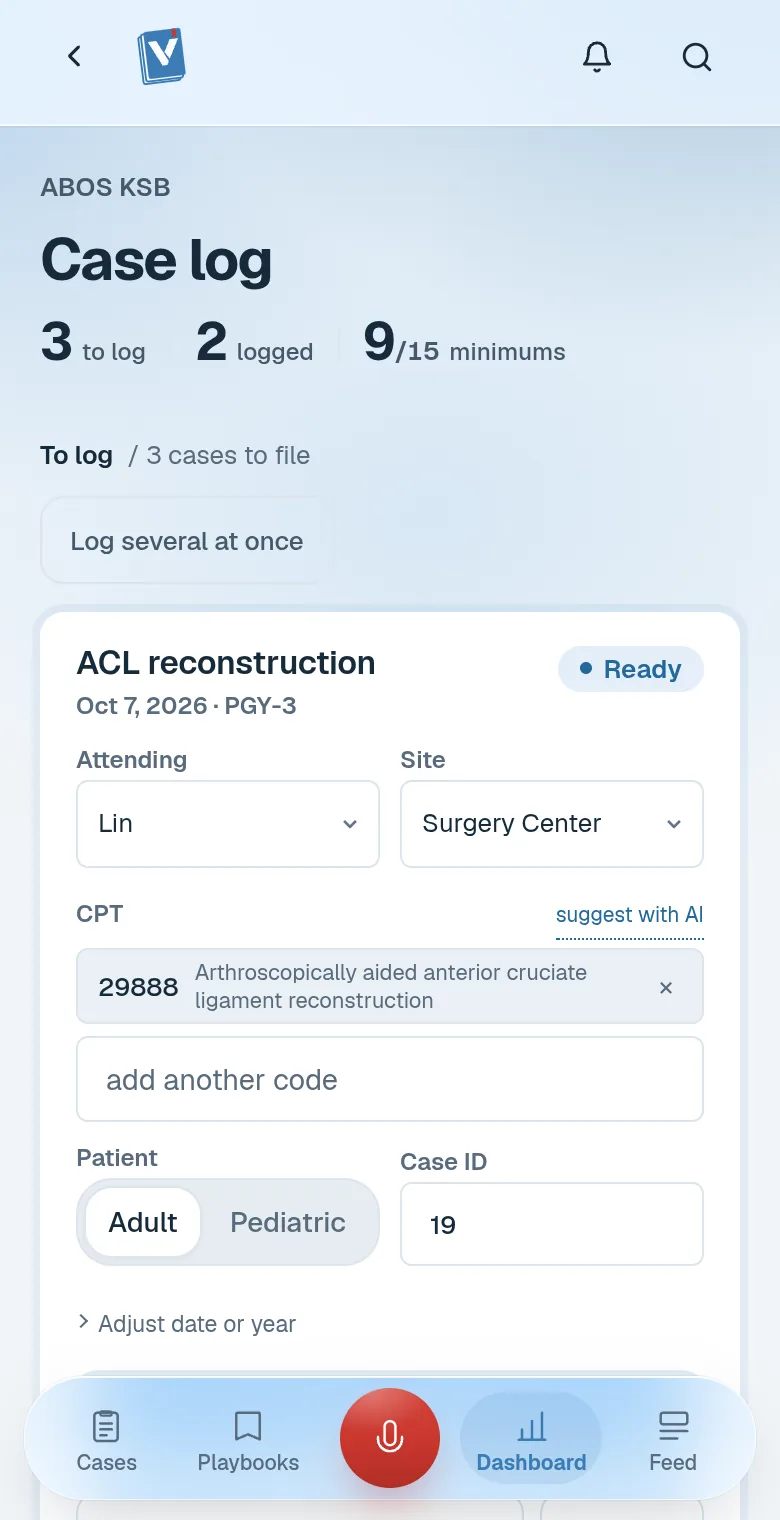
CPT, attending and site come from your dictation. Vemri logs it to ABOS, keeps a receipt and tracks your minimums.
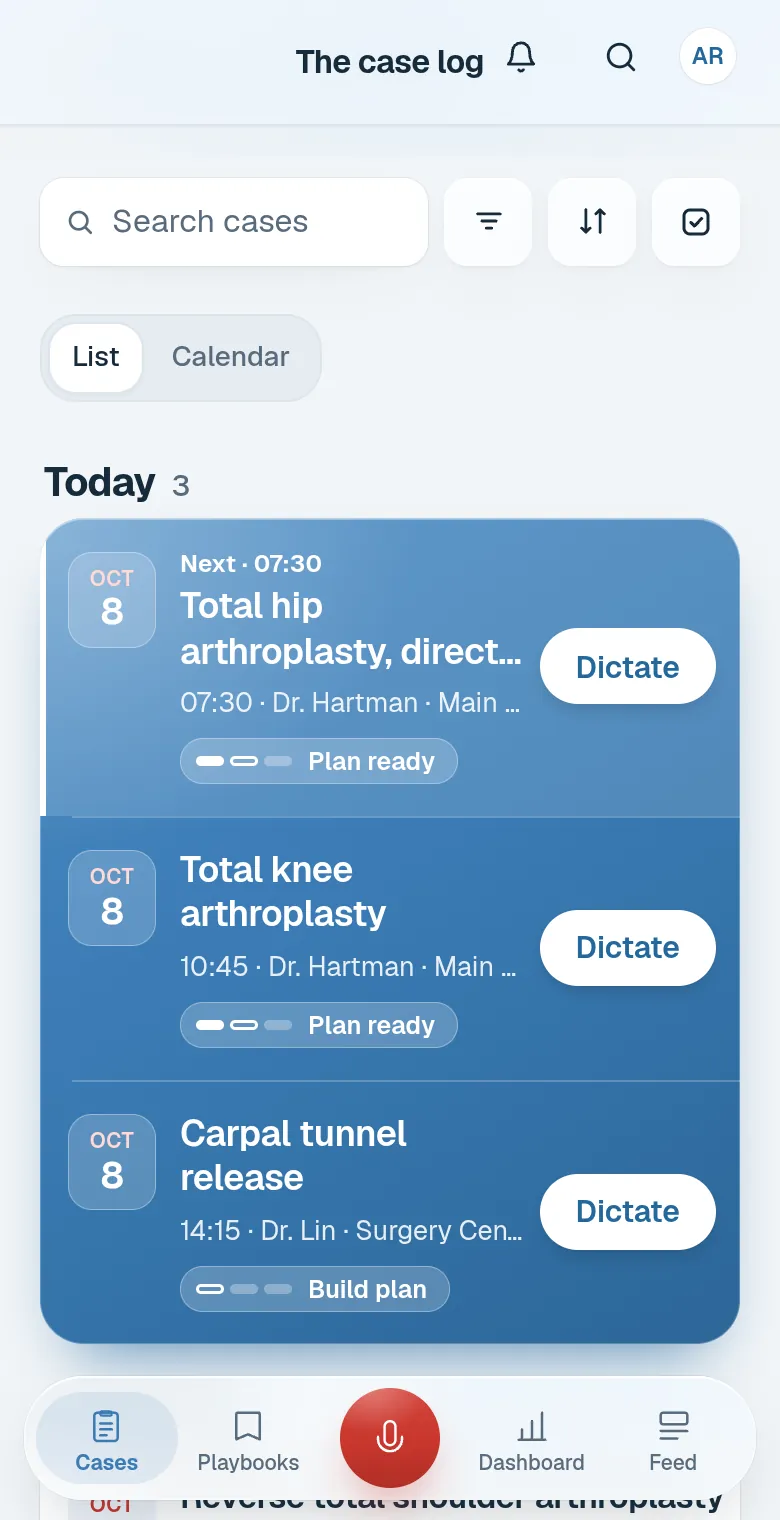
Vemri builds tomorrow's brief from your own past cases and your attending's pearls. After the case, say what you learned in thirty seconds. It files itself, and the next brief is better for it.
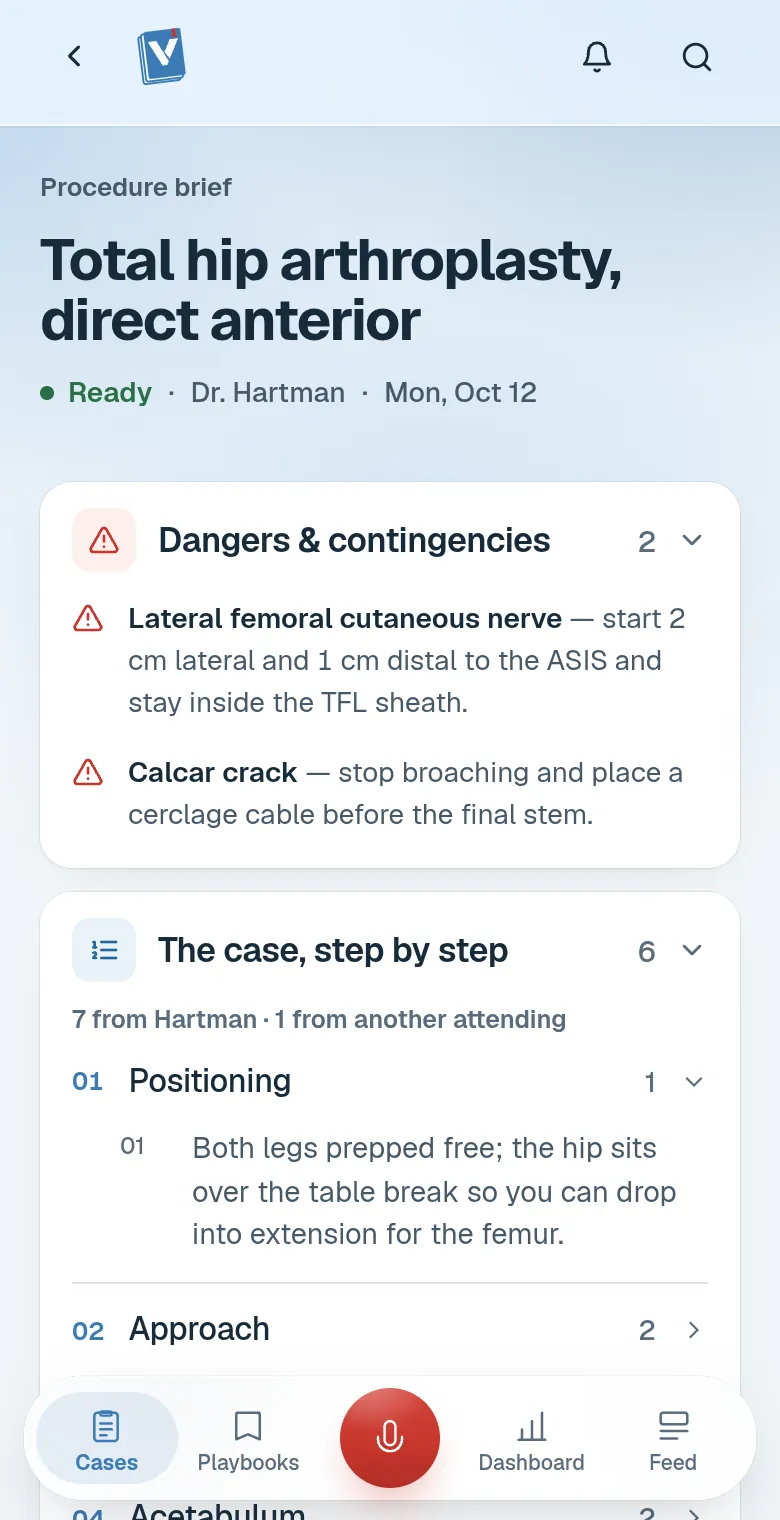
Stay lateral, inside the TFL sheath. She wants the cup at 40°.
Vemri pulls together what you already know about this procedure with this attending: the dangers, the steps, their pearls, and how your last cases went. You read it in five minutes instead of hunting through notes.
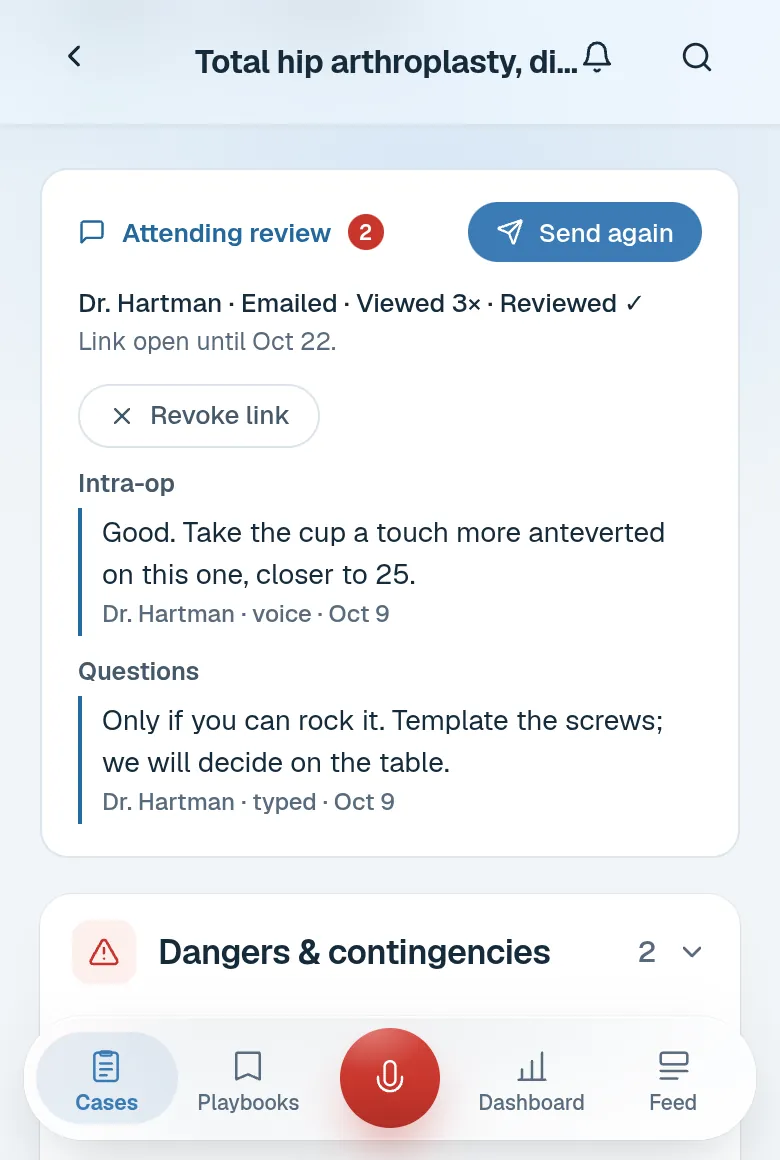
Share your pre-op plan with the attending by email. They read it on their phone, no account needed, and leave comments under each section. You walk in knowing what they want changed.
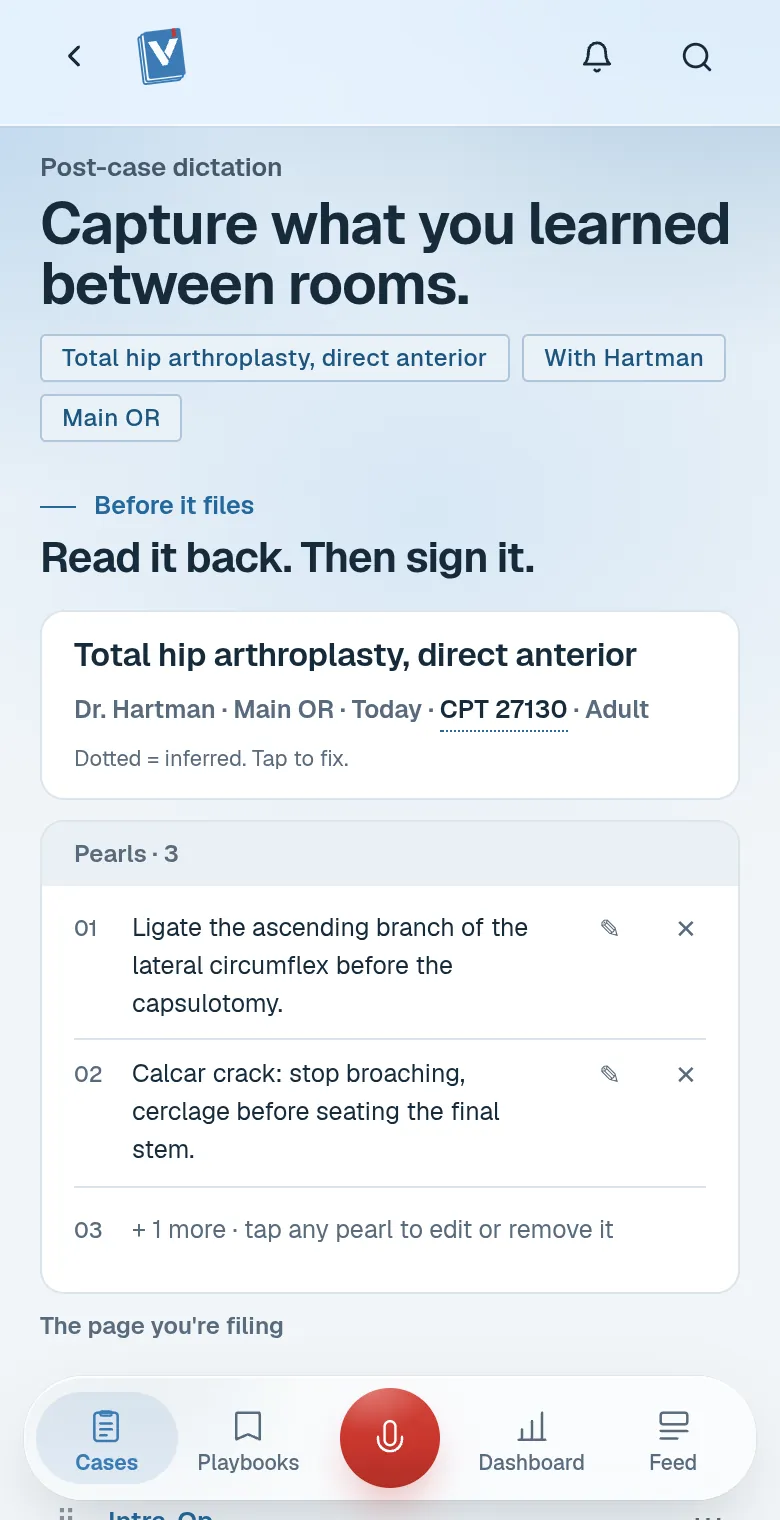
Talk for thirty seconds while it's fresh. Vemri pulls out the pearls, ties them to the procedure, the step and the attending, and drafts your case record. Read it back, fix anything, file.
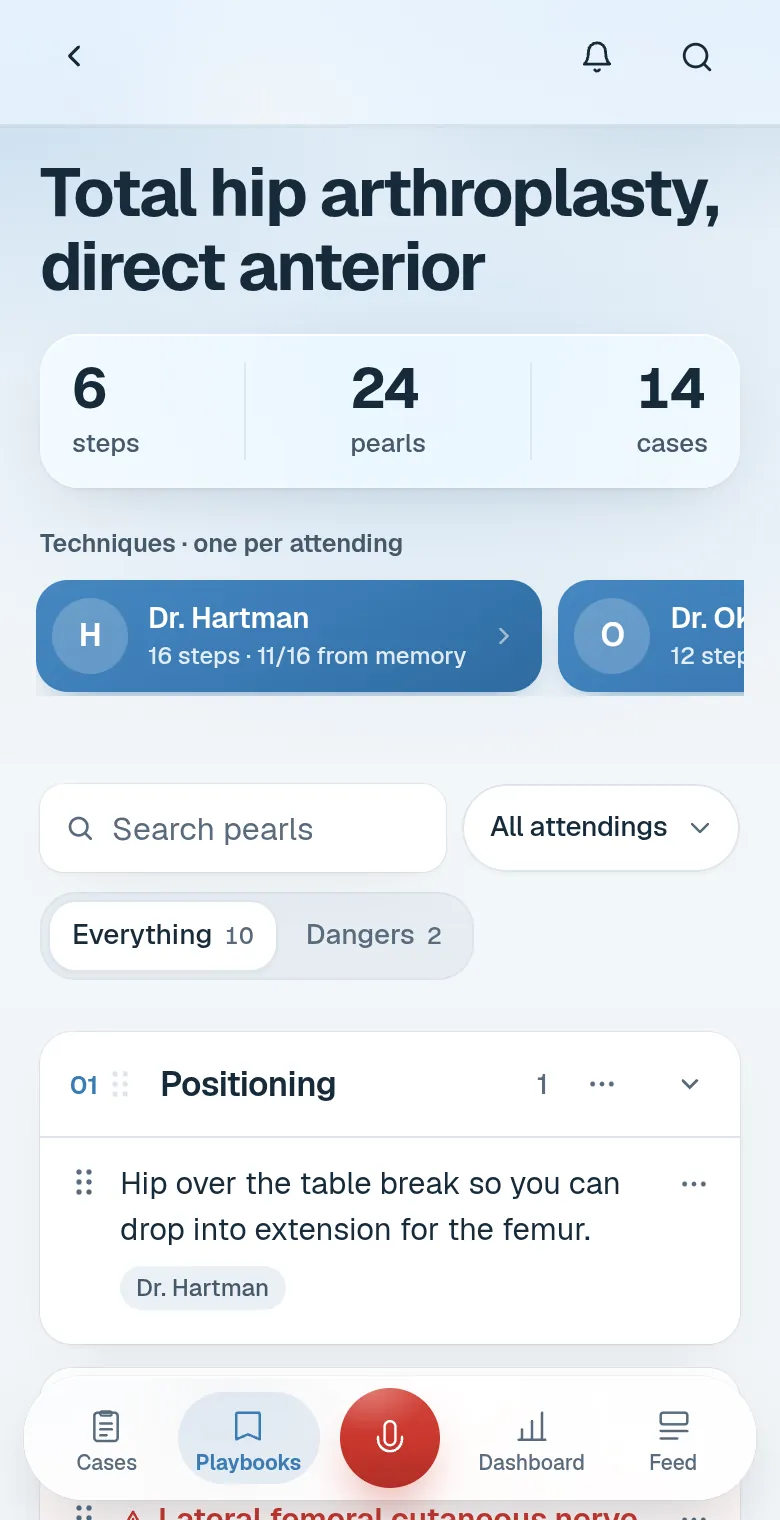
Every pearl you file lands on that procedure's playbook, under the step it belongs to. Drag things around, add your own steps and teaching images, and see at a glance how each attending does it.
CPT, attending and site come from your dictation. Vemri logs it to ABOS, keeps a receipt and tracks your minimums.
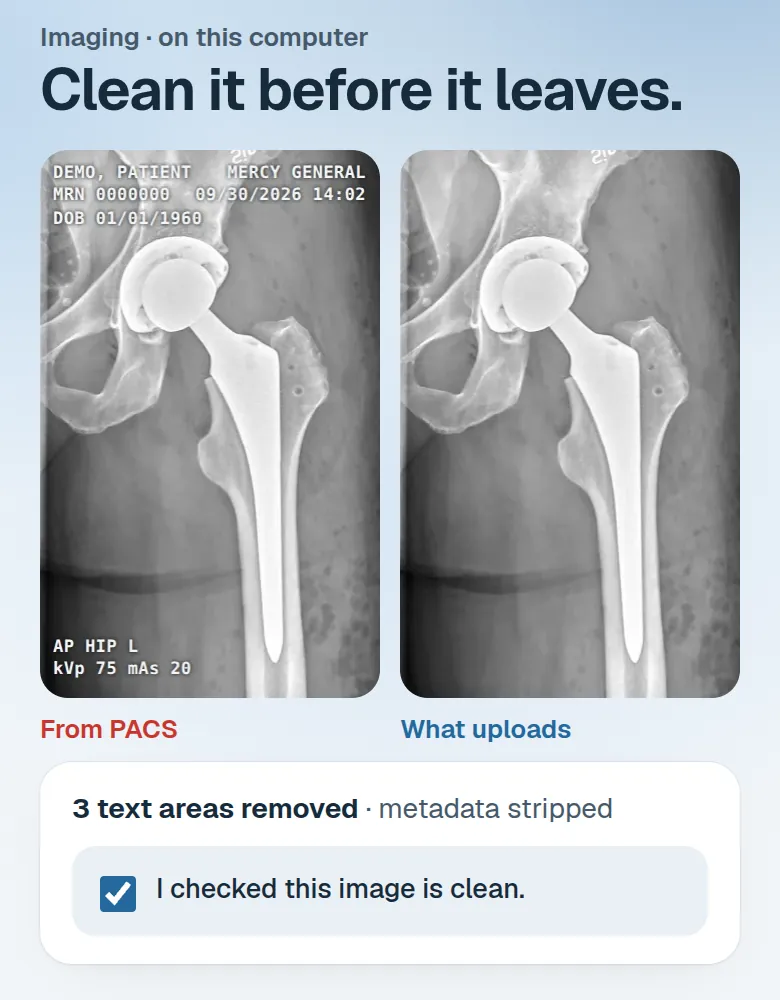
Burned-in names, MRNs and dates are removed before the image ever leaves your machine.
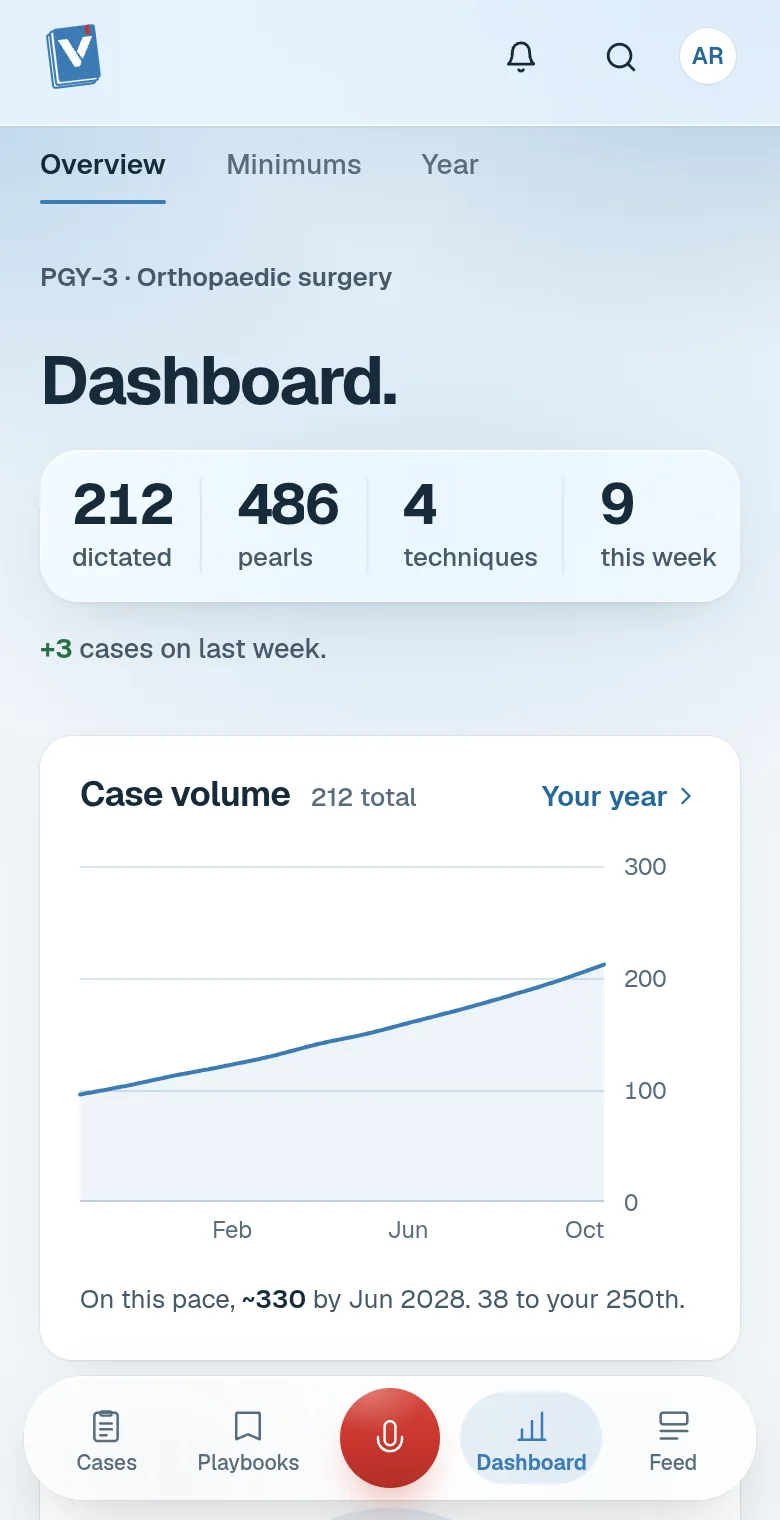
Cases by service, this week, what is next and where your volume is thin.
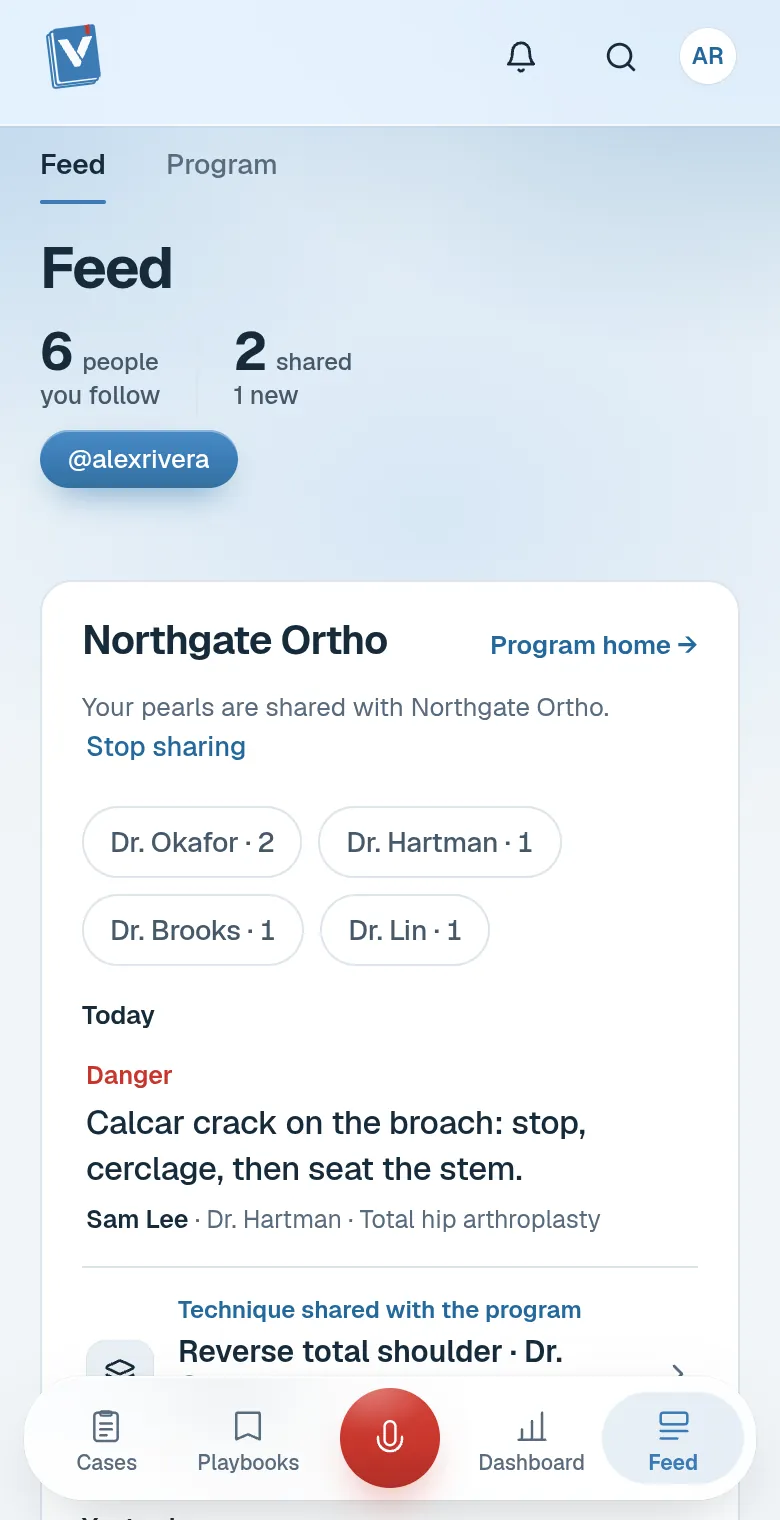
Pearls and techniques your co-residents choose to share, sorted by attending.
Pick cases from your log and Vemri builds the deck from your images and your recap: films on the screen, what you did and what you learned in the presenter view, a quiz slide if you want one.
Every image was de-identified on your computer before it was saved.

Cup at 40° inclination. Leg lengths checked on fluoro before closing. Pearl: cerclage before the final stem if you hear the calcar.
Vemri keeps a record of technique, not patients. That isn't a policy we promise to follow. It's how the system is built, and it's why your program doesn't need a contract to let you use it.
Technique, steps, dangers, attending preferences. Names, MRNs, dates of birth and contact details have nowhere to go.
Overlay text and file metadata are removed in your browser. The server checks again and rejects anything that still looks labelled.
Because no protected health information reaches our servers. The security page lays out exactly how, for your GME office.
Briefs before, pearls after, a case log that fills itself, and playbooks you take with you to fellowship and beyond.
Request early accessLine up attendings and sites across your residents, so the pearls they choose to share are sorted the same way for everyone.
For programsReview a resident's pre-op plan from an email link, no account needed. Comment on the step, not the whole thing.
How it works for attendingsVemri never collects patient identifiers, so there is no protected health information for your hospital to worry about. It works from technique, not patients. Images are de-identified on your own computer before upload.
If your program wants it in writing, send them the security page. It was written to be forwarded.
$17 a month or $170 a year after a seven-day free trial, and early users can lock in a founding rate. See pricing.
Any procedural training. It started in orthopaedics, so the templates, services and case log categories are deepest there, but every procedure, step and attending is yours to name.
Vemri runs in your phone's browser and installs to the home screen in two taps, so it opens like any other app. Here's how.
It stays yours. Keep using it as a fellow and an attending, or export it. We never sell or mine what you write.
I'm a surgery resident, and I built Vemri because I wanted to get more out of my training.
There's so much in a single day. You go case to case, and in one week a thousand pearls and subtleties get taught — small things, the kind that only come up at the table. But by the end of the day you don't have the time to sit down and capture it, and even if you do, the vivid detail is already fading — the specifics that made the lesson worth keeping. By the next time you do the case, half of it is gone. That always frustrated me.
Our attendings are too good for that. They put real effort into teaching us, and I wanted to take as much from it as I could — to actually stack that knowledge year after year instead of relearning the same things.
So I built the tool I wish I'd had on day one. After a case, you just say what you learned — right there, while it's fresh. Vemri captures it, organizes it by procedure and attending, and builds it into something that gets richer every time you log: attending-specific playbooks, ready the next time you scrub in. And it's voice-first on purpose — not ambient AI listening in the background. Saying it out loud is part of how it sticks. The act of articulating what you learned is half the value.
Whether you're a junior trying to keep your head above water or a senior refining your technique, the idea is the same: get the full value of your training, and carry it forward.
Vemri is opening to residents in small groups. Leave your email and we'll send an invite as seats open. It takes two minutes to set up on your phone.
Or take the tour first